The Circling Transformative Process: Witnessing Integration in Real Time

Hi Everyone,
As we begin week one of our ten week summer research and community-building co-learning process, I have decided to present an extra post each week specifically dedicated to the program. When we traditionally describe learning and research, we typically think of increasing our repository of knowledge and information, and creating structured outcomes that can be measured, assessed, and presented.
We focus on our relationship to knowing more than what we know, privileging process over content, and collective wisdom over individual achievement.
We ask, “What if the deepest learning doesn't come from the accumulation of knowledge? What if genuine transformation emerges through relationship itself—through the living, breathing, sometimes messy process of minds and hearts engaging across difference? What if the most valuable "data" isn't found in our conclusions but in the very process of reaching toward understanding together?”
This is precisely what we're exploring in our IRH summer program. Rather than following a predetermined curriculum with fixed outcomes, we're creating conditions of presence and curiosity where transformation can emerge naturally through authentic encounter. The process itself becomes both the container and the content of our learning, with each interaction revealing patterns that couldn't be predicted in advance.
A Clear Statement and Personal Desire
I would like to articulate lucidly, clearly, coherently, and explicitly what this summer in residence model is. It is a model of cultivating the depth dimension of human experience by engaging awareness in a recursive method of mutual witnessing, observing, and reflexive responding.
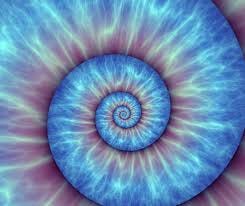
What this looks like are continuous primarily written reflections of individual and group processes in a literal, recursive integrative relational spiral pattern. Viewed as a visual, you can actually feel the (e)motioning of transition, transcendence, emergence, and transformation.
When participants engage in this process over the summer residency, they don't just learn about integration - they experience it directly through this recursive spiral of written engagement, creating a lived understanding of transformation that transcends conceptual knowledge.
What it feels like, for example, is reading a response to something I shared and experiencing a sense of awe and wonder in coming face to face with a shared recognition and knowing. This recognition and knowing is superordinate to the differences (spokes) of identity, language, and domain.
A key feature of the beauty of this methodology is being explicit ("Please note what we are engaging here. I met with each of you and asked for your impressions.” Or, “I wrote a Substack post and you commented with questions that I responded to.” Or, “You generously shared your current research and gave me the opportunity to respond.” Or, “We chose to collaborate on Substack with a video presentation you submitted in applying to the internship”). These are all examples of an interconnected, interdependent, intersubjective interweaving of meaning-making that embody the recursive spiral pattern found in literally every occurrence of consciousness. This is a critical insight for re-imagining 'mental health'--a term we challenge-- suffering, and authentic relating, and authentic communities.
Translation as Interpretive Act: The Heart of Our Methodology
Please notice my own recursive engagement in sharing this post with you. I’m conveying a foundational methodology of witnessing, observing, and responding that deepens both awareness and interpersonal sharing. The manifestation in practice of primarily writing and zoom meetings makes the process visible. The spiral pattern of returning again and again (I describe research as “seeking, again and again”) is literal, not metaphorical. It’s what an authentic or intimate conversation looks and feels like. And, because it is a felt experience, it has a transcendent quality ("experiencing a sense of awe and wonder in coming face to face with a shared recognition and knowing."). It transcends what was before and includes (integrates) what was before. Most importantly, as I am now doing, we make the recursive process explicit. We make the process itself visible through concrete examples.
I am conscious and at times self-conscious that my words might be received as excessive and that losing what I feel are nuanced distinctions might get lost in simplification.
I will trust you and myself in my need for shared meaning-making
Circle Inside a Circle: Collage as Living Metaphor
Just this morning, I had the chance to read my dear friend Virginia Reath’s wonderful news of having her work featured a new collage piece at The Center for Photography at Woodstock (CPW) in upstate NY. The exhibition is called simply `The Rose,' and curated by the artist Justine Kurland and curator Marina Chao. The exhibition and Virginia’s work are exactly the integrative expressions of an iterative process of healing and transformation. Kurland wrote that collage is
'Radical and political by its cut-apart and dissonant nature [and] urges us to honor revision and reprisal as correctives for the skewed lenses that distort our worldview.” Iterative in this context refers to " where one thing turns into another, replacing hierarchies with cyclical, organic, and revolutionary energy." The healing, therapeutic or "corrective" aspect is "cutting, ripping, and rending apart the whole, necessitating the reparative act of gluing, binding, and assembling things into a new unity."
I found that though the `Rose' exhibition is "feminist collage," the healing process of artistic expression, including collage, is universal. The exhibition's description contains two phrases that perfectly capture what I’m describing here in real time:
"Radical and political by its cut-apart and dissonant nature, collage urges us to honor revision and reprisal as correctives for the skewed lenses that distort our worldview. In this context, art-making is highlighted as an iterative process where one thing turns into another, replacing hierarchies with cyclical, organic, and revolutionary energy."
These two terms—"iterative process" and "correctives"—struck me deeply as I've been observing our onboarding process. The timing feels uncanny, as if the universe is highlighting connections we might otherwise miss.
Virginia, who balanced her artistic practice with over 35 years as a women's healthcare provider and reproductive rights activist, describes her approach in ways that mirror our IRH methodology:
Like Virginia's collage work, our IRH methodology creates meaning through assemblage across different domains, allowing interconnections to emerge organically rather than forcing them through rigid frameworks. Both approaches replace hierarchies with "cyclical, organic, and revolutionary energy" that transforms understanding.
Another Example: Technology as Sacred Relational Space
Examples of this co-learning experiment include onboarding individual and group meetings (“Drop-ins”) and invitations to share impressions of these meetings, invitations for grad fellows to share their research, invitations for all participants to read Substack posts and comment.
One undergraduate intern responded to my post on technology with insights that left me deeply inspired. They shared:
"Reflecting on technology as sacred architecture really moved me. What really stands out to me the most is the reminder that connection isn't about proximity, but about presence. I've often felt torn between physical closeness and digital interaction, especially as someone who values community and emotional responsibility. This piece helped reframe the virtual not as a false version of reality, but as its own deeply intentional space. One where healing and relational knowing can still thrive."
They went on to reference the spiral metaphor directly, noting how "growth often returns me to the same questions, but with more insight and more compassion." Without formal training in IRH concepts, they were articulating the recursive spiral pattern from their own lived experience.
Their question—"what kinds of rituals or design choices help make a virtual space feel truly relational or sacred?"—demonstrates exactly how theoretical understanding naturally generates practical exploration. This is the embodied integration we're seeking to cultivate.
One More Example: Spiral Patterns as Organizing Principles
A lively discussion with another undergraduate intern was in response to my invitation to collaborate on Substack with a video he produced on spiral patterns of emergence and love, originally submitted with his internship application. Deeply philosophical and spiritual in a “collage-like” mixed expression, his work intuitively connects mathematical patterns (Fibonacci sequence) with emotional and relational development.
When we were selecting images for our collaborative post, he compassionately asked why I had chosen a particular image. I was so deeply moved by this simple question that created space for genuine connection. In our exchange, a remarkable reversal of expected hierarchy occurred that demonstrates exactly what makes this methodology revolutionary.
Our exchange unfolded with him asking: "What do you think about when you see that [my selected image]?"
I playfully responded: "Before we begin--which we already have because what we call here and now and 'beginning' are only relative-- consider how the recursive 'spiral' is found in your very question and, by bringing it into our intersubjective awareness, we dismantle the false hierarchy of our-- teacher/student-- relationship. The potential barriers of identity and difference immediately dissolve into communion.
Thank you for asking what I 'think about.'
The first thing I think about is how your point-- that the photo you selected “subtly reinforces the relevance of the spiral without needing to explain too much”-- creates this exquisite bridge between Consciousness (as a Unified Field) and human consciousness (the infinite forming of the Unified Field).
Your image 'shows to say' what is. My photo also 'shows to say' how what is, in human consciousness, forms through the doing and making of artistic expression, and so brings into Consciousness what human relationships can look like if we align with the Source of our human forming."
What made this exchange so significant was how it dissolved expected hierarchies. At 20, his image "shows to say what is" - capturing the fundamental nature of reality directly and simply. At 67, my image "shows to say how what is forms through doing and making" - demonstrating the process through artistic expression. Without creating a power dynamic, we get to honor experience across generations, creating authentic connection through difference rather than despite it.
This real-time exchange perfectly embodied translation as interpretive act by connecting theory to lived experience, consciousness to relationship, and present understanding to cultural wisdom.
The Revolutionary Reframing: From Integration Challenges to Emergence
What I hoped to convey in this post is what we believe a paradigm shift in how we understand human suffering and transformation. The living demonstrations of this recursive spiraling (“I live my life in ever-widening circles”) as an intersubjective awareness and witnessing complexity and liminality as real, embodied experiences is already moving our new community relationships towards higher and higher levels of recursive integration—what we call healing, reframed not as fixing broken parts but addressing integration challenges.
This shift has significant implications for `mental health’ and authentic relating and communities. Our relationship to suffering is not optional or tragic; it is meaningful. What we call “symptoms” are literal communications of needs rather than malfunctions. Treatment is a process of emergence and recursive integration, and healing is part of a developmental process of increased integration. Equally learning not simply receiving knowledge and information, it is cultivating knowing in relation to. Learning and transformation recognize the inherent intelligence in all human systems while acknowledging that some organizational patterns create more possibility than others.
I look forward to our next post and hopeful exchange as we continue to explore and bring into awareness and conversation the power and beauty and sheer creativity of authentic relating.
Warmly,
Paul
Hi Paul,
What stood out most is your insistence on making the process itself visible, relational, and sacred. It’s rare to encounter a model of learning that doesn't ask us to accumulate, but instead to attune to the situation. The IRH methodology reminds me that most transformations often emerge from the recursive journeying itself. This is not just theory, it’s practice. Your reflections on collage and spiral patterns also really stuck out to me. I was especially moved by the quote: “Cutting, ripping, and rending apart the whole, necessitating the reparative act of gluing, binding, and assembling things into a new unity.” It resonated as both an artistic and relational truth. Healing and integration aren’t about restoring the “original” whole, they’re about making meaning from what’s been rearranged. Your language gives a name to something I’ve often felt but hadn’t yet been able to articulate. Thank you for not simplifying. Thank you for trusting us with the complexity.
A question I’m thinking about is: How do we honor the iterative without becoming stuck in repetition and what rituals help us understand when the spiral is expanding rather than looping in on itself?
Thanks,
Aley